Pickleball Paddle Weight: Why Heavier Isn't Automatically Better
Quick Answer: Most players — especially beginners — do better with a mid-weight paddle (7.3-8.0 oz). Heavier paddles add power but sacrifice reaction time and increase arm fatigue and injury risk; lighter paddles improve control but need more arm-generated power.
You heard that a heavier paddle hits harder, so you bought the heaviest one on the shelf. Three weeks in, your elbow aches and you’re consistently late on volleys at the net. That’s not bad luck — it’s a predictable outcome of paddle weight working against you.

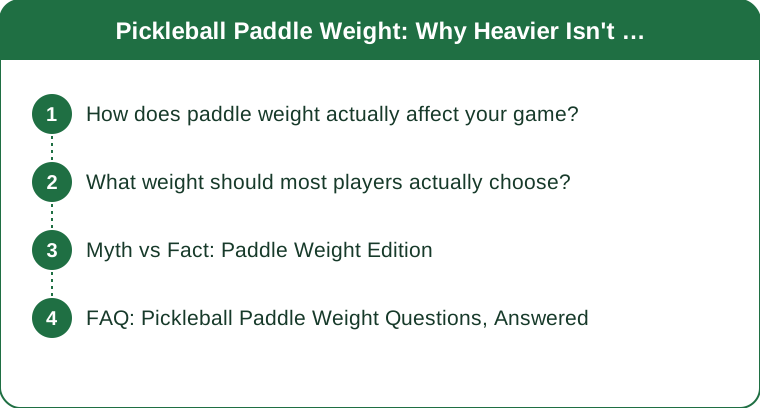
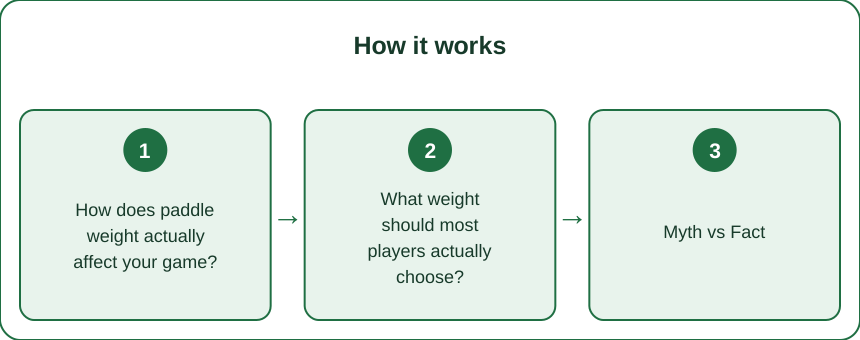
How does paddle weight actually affect your game?
Weight trades off two things directly: power and maneuverability. A heavier paddle (8.0oz+) generates more pop on contact with less swing effort, which sounds appealing — but it also slows your reaction time at the net, where volleys happen in a fraction of a second, and adds strain to your wrist and elbow over a match.
A lighter paddle (under 7.3oz) is faster to react and gentler on your joints, but you’ll need more deliberate arm swing to generate the same pace, which can fatigue your arm differently over a long session.
What weight should most players actually choose?
Mid-weight (7.3-8.0oz) is the sweet spot for most players, beginner through intermediate — enough mass for reasonable power without sacrificing the quick hands needed at the kitchen line, where most points are decided.
If you’re specifically an aggressive baseline power-hitter with no elbow history, leaning slightly heavier can work. If you have any wrist or elbow sensitivity, or you’re newer to the sport, start light-to-mid and add weight later if you genuinely feel underpowered.

Myth vs Fact: Paddle Weight Edition
Myth: A heavier paddle instantly improves your power. Fact: Paddle technology (core material, face surface) affects power output more than raw weight alone — a well-designed mid-weight paddle can out-hit a poorly designed heavy one.
Myth: Pros all use heavy paddles. Fact: Most competitive players use mid-weight paddles specifically because reaction speed at the net decides more points than raw power at this level.
Myth: Paddle weight doesn’t affect injury risk. Fact: Paddles over 8.3oz are associated with more reported wrist and elbow strain in recreational players, especially those newer to racquet sports.
FAQ: Pickleball Paddle Weight Questions, Answered
Can I add weight tape to a paddle later if I want more power?
Yes — many players start lighter and add small strips of lead tape to the paddle face or edge to fine-tune weight and swing weight without buying a new paddle.
Does paddle weight matter more than grip size?
Both matter, but an ill-fitting grip causes more elbow strain than weight alone — check grip size (usually 4-4.5in circumference for most women’s hands) alongside weight.
How do I know if my current paddle is too heavy for me?
If you’re consistently late on volleys at the net or notice elbow or wrist soreness after playing, try demoing a paddle half an ounce lighter before assuming it’s your technique.
TL;DR:
- Mid-weight paddles (7.3-8.0oz) suit most players, balancing power and net-speed reaction
- Heavier paddles trade reaction time and joint comfort for more raw power
- Paddle design matters as much as weight for actual power output
- Late reactions at the net or elbow soreness are signs to try lighter, not heavier
Demo a mid-weight paddle before buying the heaviest one on the rack — your elbow will likely thank you.
See It in Motion
Seen here: UPF 50+ Adjustable A-Line Running Skort with Pockets — shop it on bubblelime.com
Keep Reading
This article is for general informational and styling purposes only. Fit, sizing, and product availability may vary.