Why Does Outdoor Pickleball Change Completely in Autumn?
Quick Answer: Cold air makes the pickleball less bouncy and more brittle, so rallies play lower and slower and balls crack far more often. Denser cold air slows the ball through the air. Autumn wind builds in the afternoon rather than the morning. And the low sun sits directly in the eyeline for a long stretch of the day rather than passing overhead. Together these change strategy, equipment, and scheduling — not just comfort.
Your dinks are dying into the net. Your drives are landing short. Two balls cracked in a week.
Nothing about your game changed. Everything about the conditions did.
This is general information, not medical advice.
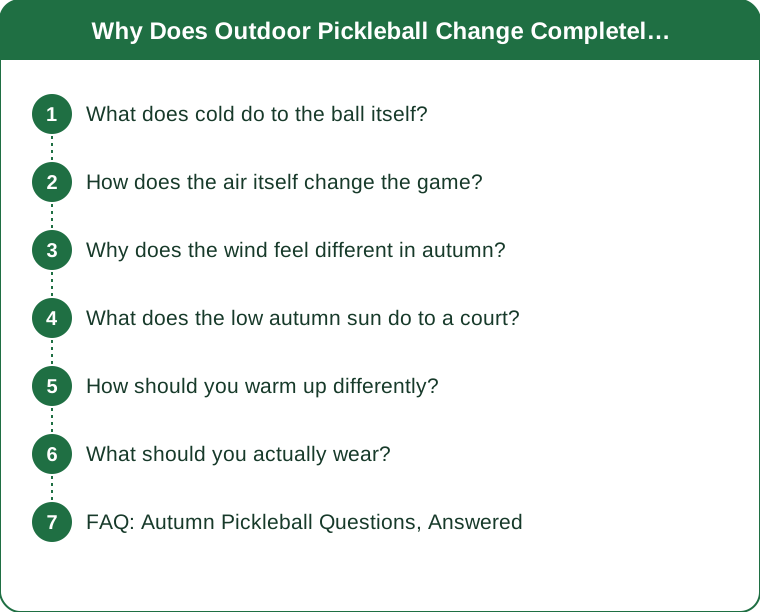
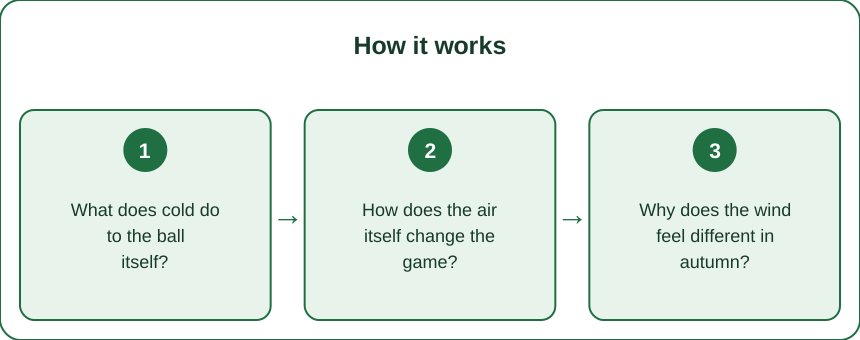
What does cold do to the ball itself?
It changes both how it plays and how long it lasts, and the second one surprises people more than the first.
Pickleballs are moulded from rigid plastic — polymer formulations that behave predictably at moderate temperatures and considerably less predictably at the ends of the range. As temperature drops, that plastic becomes harder and less elastic.
A less elastic ball deforms less on impact with the paddle and the court, and returns less of the energy that went into it. The practical consequences are consistent and immediate:
Lower bounce. Balls sit down more off the bounce, which is why dinks that were clearing the net comfortably in summer start catching the tape. The ball is not doing anything wrong — it is bouncing to a lower height and arriving lower than your stroke expects.
Less pace off the paddle. The same swing produces a slower ball, because less energy is returned in the collision. Drives that were penetrating now land shorter, and putaways that used to end points get returned.
A different sound and feel. Cold balls sound duller and feel harder through the paddle. Many players report the feedback being noticeably less pleasant, which affects touch shots most.
Dramatically more cracking. This is the big one. Cold plastic is more brittle, and brittle plastic cracks under the repeated impact of hard hitting. Players who go through one or two balls a month in summer commonly go through several in a cold month. Outdoor balls in particular have thinner walls between the holes and are the more vulnerable design.
Some manufacturers produce balls specifically formulated for cooler play, and they are worth seeking out if you play through the season. Keeping spare balls somewhere warm — indoors, in a car with the heating on, in a jacket pocket between games — and rotating them in makes a genuine difference. A ball straight from a cold car boot is at its worst.
Is there a temperature where it stops being worth playing?
People play in a very wide range and the ball behaviour degrades progressively rather than at a cliff edge. Below freezing, cracking becomes frequent enough that most players move indoors.
How does the air itself change the game?
Cold air is denser air, and denser air is more resistance.
Air density rises measurably as temperature falls. Since aerodynamic drag scales directly with air density, a ball travelling through cold air decelerates faster than the same ball in warm air. For a projectile as light and as heavily perforated as a pickleball, this effect is proportionally larger than it would be for a heavier ball — the ball has very little momentum relative to its surface area, so drag dominates its flight.
Combined with the reduced bounce, this produces a game that plays distinctly slower and shorter. Two specific consequences:
Drives lose their sting. A third shot drive that was effective in summer arrives slower and lower, giving opponents more time. The third shot drop correspondingly becomes more valuable, because a slower ball makes the drop easier to execute and harder to attack.
Lobs behave differently. A lob in cold dense air is slowed more on the way up and comes down steeper and shorter than expected. Players who rely on lobs generally find them landing shorter than intended in autumn.
There is a compensating factor worth knowing: cold air is also denser for you, meaning a fractionally greater oxygen content per breath. That effect is small enough not to notice against the much larger effect on the ball.
The practical adjustment: swing a little more, aim a little higher. Most players unconsciously do this by the third game and spend the first two frustrated. Making it deliberate from the start saves the frustration.
Should I change paddles in cold weather?
Paddle materials are affected far less than the ball. Some players find a slightly softer or more forgiving paddle face helps with the harsher feel of a cold ball, and it is a preference rather than a requirement.
Why does the wind feel different in autumn?
Because it arrives on a different schedule, and pickleball is unusually exposed to it.
Through summer, many regions get relatively calm mornings and a breeze that builds and then fades. In autumn, the temperature difference between land and any nearby water is larger and the atmospheric pattern shifts — in many places wind builds through the afternoon and holds into the evening.
This matters because a pickleball is exceptionally light. At around 25 grams with holes through it, it has one of the highest surface-area-to-mass ratios of any ball sport. It is affected by wind that would not visibly disturb a tennis ball.
The adjustments experienced players make:
Check the wind before the first serve and pick your end deliberately. Knowing which end you are on matters more than in almost any other racquet sport.
Into the wind: hit deeper and with more pace than feels right. The wind will bring it back. Balls that feel like they are sailing long usually land in.
With the wind: soften everything. This is where most points are lost. A normal drive with the wind behind it goes long, and dinks in particular need meaningfully less pace.
Crosswind is the hardest and the most underestimated. It moves the ball laterally during flight, and the effect on a lightweight perforated ball is substantial. Aiming slightly into the wind and playing higher-percentage shots down the middle both reduce the error rate.
Serve and return conservatively into wind. Unforced errors climb steeply in wind, and the player who simply keeps the ball in play wins a much greater share of points than usual.
Does the ball choice matter in wind?
Heavier balls within the legal range are less affected, and the difference is modest. Technique adjustment does far more than equipment choice here.
What does the low autumn sun do to a court?
It creates a problem that midsummer largely does not have, and it lasts for hours rather than minutes.
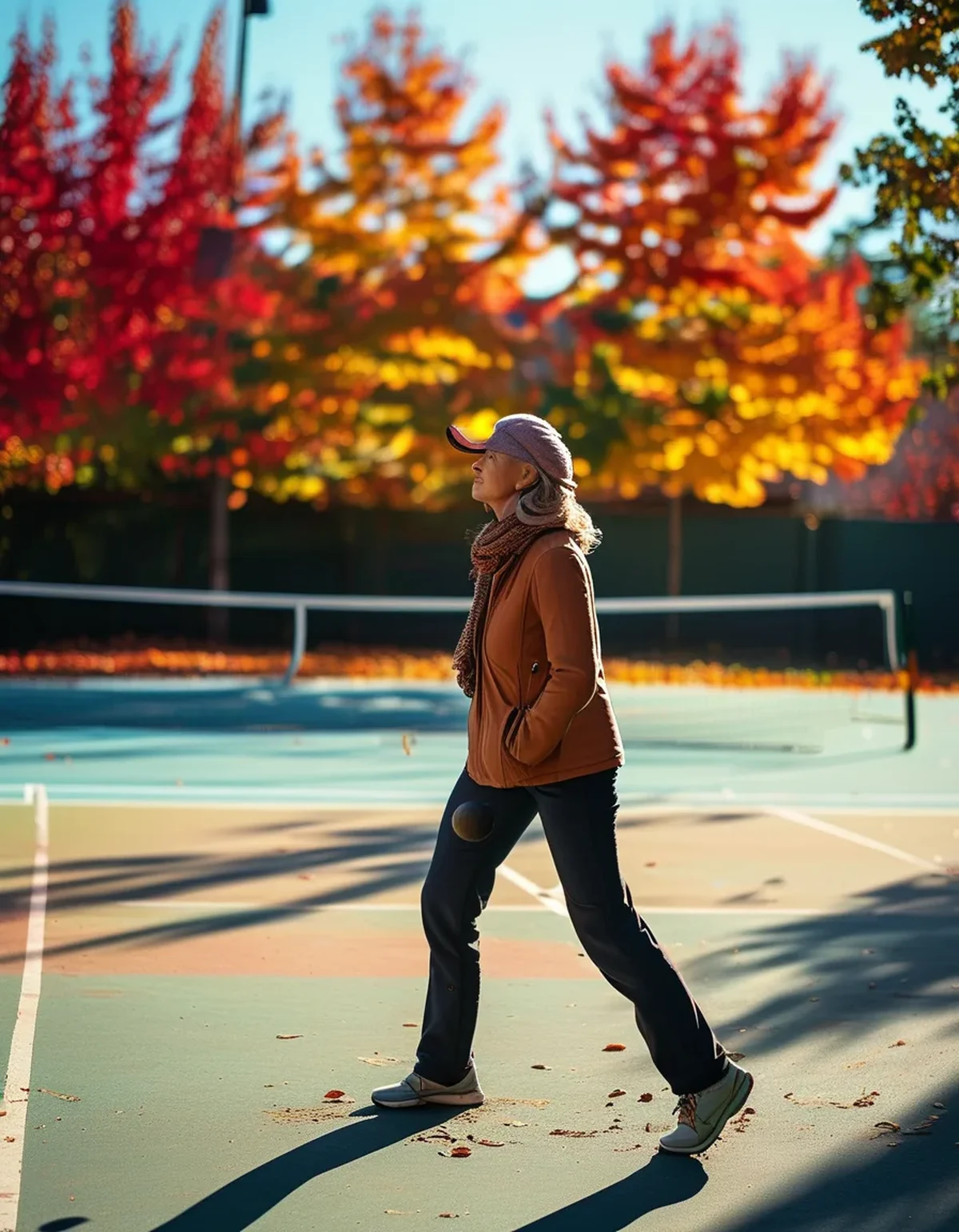
In high summer the sun passes high overhead, so there is a relatively brief window at each end of the day when it is low enough to be in the eyeline. In autumn the sun tracks much lower across the whole sky, which means it sits in the problematic zone for a large share of the playable day.
For pickleball specifically, this matters more than for many sports because overhead shots are a core part of the game. Tracking a lob against a low sun is genuinely difficult and occasionally unsafe — a misjudged overhead with a paddle in hand near a partner is worth avoiding.
What helps:
Switch ends more often. Many recreational groups switch at the halfway point of each game rather than only between games when the sun is a factor. It equalizes an advantage that can otherwise be decisive.
Wear a cap or visor. The simplest and most effective solution. A brim blocks the direct line to the sun without affecting your view of the court.
Sunglasses are less useful than a brim for this problem. They reduce brightness overall and do not block a direct low-angle source. A brim plus sunglasses works; sunglasses alone often does not.
Call the lob rather than chasing it. Communicating with your partner about who takes an overhead into the sun is a straightforward safety habit.
Know your court orientation. Courts aligned north-south are far less affected than east-west ones. If you have a choice of courts in autumn, this is the criterion that matters most.
Long shadows also matter. Fences, trees, and buildings cast long shadows across courts in autumn, creating patches of light and dark that make ball tracking harder even when the sun is not directly in your eyes.
How should you warm up differently?
Longer, and with more attention to the specific tissues pickleball loads.
Cold muscle produces less force, moves more slowly, and is less tolerant of sudden lengthening. Pickleball involves a great deal of rapid direction change, sudden lunging into the kitchen, and reaching — all movements that ask muscles to lengthen quickly under load. That combination is where cold-weather injuries concentrate.
The areas that most commonly complain:
Calves and Achilles. The push-off for a quick lateral step or a lunge to a dink loads the calf sharply. This is one of the more frequently reported pickleball injuries and it worsens in cold conditions.
Hamstrings. Reaching backward for a lob or pushing off to sprint forward asks the hamstring to work at length, which is precisely what cold tissue tolerates least.
Shoulder. Overheads and serves in a cold shoulder are worth building up to rather than starting with.
Lower back. Rotation combined with reaching, repeated, in a cold and slightly braced posture.
A reasonable autumn warm-up: five to ten minutes of general movement to raise temperature — a brisk walk, easy jogging on the spot, arm circles — followed by dynamic movement through the ranges you will actually use: gentle lunges, lateral steps, shoulder rotations, easy dinking before any hard hitting. Save static stretching for after.
Stay warm between games. A layer on while sitting out, removed when you go back on. Cooling down completely and then restarting at full pace is the pattern that causes problems.
How long before I can play hard?
Most players find the first game is effectively an extension of the warm-up in cold weather. Treating it that way deliberately — rather than trying to compete in it — reduces both injuries and frustration.
What should you actually wear?
The stop-start nature of the game makes this less obvious than it looks.
Pickleball alternates between intense bursts and standing between points, which means you overheat during rallies and cool down between them. Clothing needs to accommodate both.
Layers you can remove without stopping play. A zip-up mid layer over a wicking base is the standard solution. Playing in one heavy layer means being too hot during rallies and too cold between them.
Avoid cotton against the skin. Sweat during rallies plus standing still between them is exactly the situation where damp cotton chills you.
Cover the arms initially. Arm warmers or a long-sleeve base layer that can be pushed up. The shoulder and elbow benefit from staying warm, and both are common complaint sites.
Hands need attention. Cold hands reduce grip feel and paddle control noticeably, which affects touch shots first. Thin gloves between games, or keeping a hand in a pocket while not playing, both help. Some players use a slightly tackier grip in cold weather to compensate for reduced sensitivity.
Full-length legs from mid-autumn. Knees and hamstrings play a large role in this sport and both benefit from being covered. Leggings or joggers over shorts is the most common change players make and one of the most useful.
Shoes matter more on cold, damp courts. Outdoor courts hold moisture and morning dew far longer in autumn, and a damp court surface reduces grip during the lateral movements the game demands. Check tread and be cautious in the first game on a damp surface.
A hat or headband. Meaningful heat is lost from the head, and a brim solves the sun problem at the same time.
FAQ: Autumn Pickleball Questions, Answered
Should I buy different balls for autumn?
If you play regularly outdoors, yes. Several manufacturers offer balls formulated for cooler conditions, and they crack less and play more consistently. Keeping balls warm between uses helps regardless of which you buy.
Why do balls crack so much more in the cold?
The plastic becomes more brittle at lower temperatures, so the repeated impact of play produces cracks much sooner. Hard hitting on a very cold ball is the fastest way to crack one.
Does cold affect the paddle?
Far less than the ball. Grip tack and your own hand sensitivity change more than the paddle itself does.
Should I move indoors for winter?
Many players do, and indoor play uses a different ball with larger holes that plays differently again. Plenty of people play outdoors year-round with appropriate clothing and warm-up.
Is it more injury-prone in cold weather?
Cold tissue is less tolerant of the rapid lengthening this sport demands, which makes an adequate warm-up more important rather than the sport more dangerous. The warm-up is the variable.
Why does my score drop in autumn even against the same opponents?
Everyone is dealing with the same slower ball and lower bounce, so results between regular partners often stay similar. What changes is that the game rewards patience and placement over pace — players whose game is built on drives feel the shift most.
What is the single most useful adjustment?
Aim slightly higher over the net. Almost every autumn problem — lower bounce, denser air, less pace off the paddle — is addressed by giving the ball more margin over the tape.
TL;DR:
- Cold plastic is harder and less elastic, so the ball bounces lower, comes off the paddle slower, and cracks far more often.
- Denser cold air adds drag to an exceptionally light ball, so drives land short and lobs come down steeper.
- Autumn wind builds in the afternoon — check it before the first serve and soften everything downwind.
- The low sun sits in the eyeline for hours rather than minutes; a brim and switching ends mid-game both help.
- Warm up considerably longer, with attention to calves, hamstrings, and shoulders.
- Layer for stop-start play, keep hands warm, and cover the legs from mid-autumn.
- Aim higher over the net — it fixes most of the ball and air problems at once.
Autumn pickleball rewards patience and placement over power. The players who adjust fastest are usually the ones who stopped trying to hit through the conditions.
This is general information, not medical advice.
See It in Motion
Seen here: UPF 50+ Pleated Running Skort with 26” Leggings & Pockets — shop similar styles on bubblelime.com
Keep Reading
This article is for general informational and styling purposes only. Fit, sizing, and product availability may vary.