The Real Reason Most Pickleball Players Plateau at the 3.5 Skill Level
Quick Answer: Most players plateau around the 3.5 level because they rely on power and reaction speed to win points at lower levels, and those tools stop working once opponents can also dink, reset, and construct points patiently — the plateau breaks by learning to slow the game down, not speed it up.
If you’ve hit a wall where your win rate against similarly-rated players suddenly stalls, you’re not imagining it — 3.5 is a well-documented ceiling, and it’s almost always a strategy problem, not an athleticism problem.

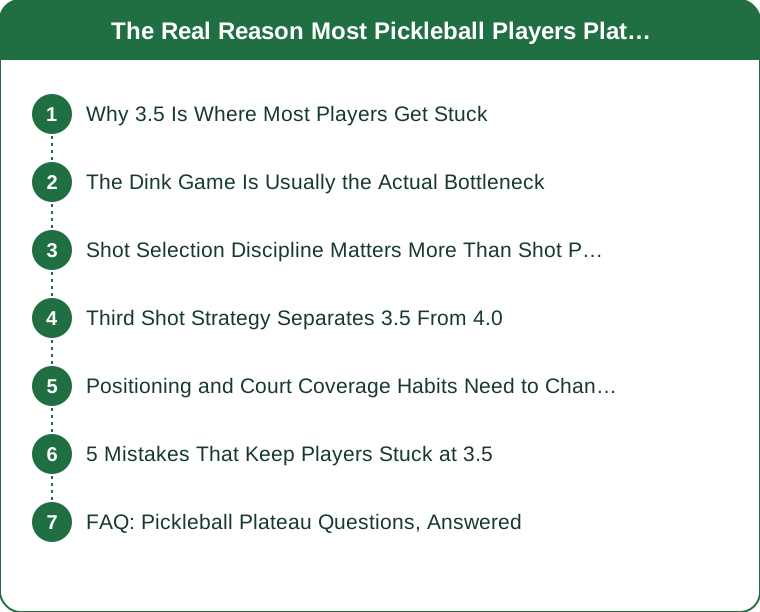
Why 3.5 Is Where Most Players Get Stuck
Below 3.5, points are frequently decided by unforced errors, power shots, and reaction speed — players who hit hard and move well can win on athleticism alone. At 3.5 and above, opponents can consistently return those shots, which means the games that used to end quickly now extend into long dinking rallies that reward patience over power. Players who built their entire game around hitting hard suddenly find that same shot gets punished, and they don’t have a second gear to shift into. Recognizing that the game itself changes at this level — from a power contest to a patience and placement contest — is the first real step off the plateau, because it reframes what you should even be practicing.
The Dink Game Is Usually the Actual Bottleneck
Most stuck players can rally at the baseline and can smash a high ball, but their soft game — the dink exchange at the non-volley line — is underdeveloped because it’s the least fun part of practice. Dinking well requires soft hands, a stable low stance, and the patience to hit 10-15 dinks in a row without forcing an attack, which feels unnatural if you’re used to ending points quickly. Deliberately practicing dink rallies where the goal is to keep the ball in play for as long as possible, rather than to win the point, retrains the reflex to force things early. Most players who break through 3.5 report that their dink consistency improved dramatically before their win rate did — the two are directly linked.
Shot Selection Discipline Matters More Than Shot Power
A common 3.5 habit is attacking a ball that’s still above the net and moving, which is a low-percentage shot that experienced opponents punish. The higher-percentage play — waiting for a ball that has dropped below net height, or waiting for a clear opening — feels passive in the moment but wins more points over a full match. Learning to recognize ‘attackable’ versus ‘reset’ balls is a specific, trainable skill, and most 3.5 players simply haven’t been taught to distinguish the two; they attack on instinct rather than on shot quality.

Third Shot Strategy Separates 3.5 From 4.0
The third shot — the serving team’s first shot after the return — is one of the clearest technical gaps at this level. Players stuck at 3.5 often drive the third shot hard, which is easy to counter-attack; players progressing toward 4.0 develop a reliable third shot drop, a soft, arcing shot that lands in the opponent’s kitchen and lets the serving team advance to the net. This single shot is widely considered the highest-leverage skill to drill at this stage, because it converts serving from a defensive scramble into a controlled approach to the net.
Positioning and Court Coverage Habits Need to Change Too
Below 3.5, players often stay near the baseline out of habit or hesitation to approach the net, which cedes control of the point to whichever team gets to the kitchen line first. Committing to moving up to the non-volley line as a unit after the third shot, rather than hanging back individually, changes the entire tactical picture of a point. This requires trusting your partner’s coverage and communicating, which is as much a mental shift as a physical one — many players plateau partly because they haven’t built that trust or communication habit with regular partners yet.
5 Mistakes That Keep Players Stuck at 3.5
1. Attacking every ball above the net instead of waiting for a clear opportunity. 2. Avoiding dink drills because they’re less satisfying than power drills. 3. Driving the third shot instead of developing a soft drop. 4. Staying at the baseline out of habit rather than advancing to the kitchen line as a team. 5. Playing only with partners at the same level, which reinforces existing habits instead of exposing weaknesses against better competition.
FAQ: Pickleball Plateau Questions, Answered
How long does it typically take to move from 3.5 to 4.0?
There’s wide variation, but players who deliberately drill dinking and the third-shot drop — rather than just playing casual games — often see rating movement within 3-6 months of consistent, focused practice.
Should I take lessons to break a plateau, or just play more?
Playing more of the same games tends to reinforce the same habits; a handful of lessons focused specifically on dinking and third-shot drops tends to produce faster, more targeted improvement than volume alone.
Is paddle equipment a factor in breaking the 3.5 plateau?
Equipment matters less than technique at this stage — a heavier or more expensive paddle won’t fix shot selection or dink consistency, though a paddle that suits your grip and swing style can make soft-game practice feel more natural.
TL;DR:
- The 3.5 plateau happens because power and reaction speed stop being enough once opponents can also dink and reset
- Dink consistency is usually the real bottleneck, not athleticism
- Learning to distinguish attackable balls from reset balls prevents low-percentage errors
- The third shot drop and advancing to the net as a team are the two highest-leverage skills to drill next
Breaking the plateau is less about training harder and more about training the slower, less exciting parts of the game you’ve been skipping.
See It in Motion
Seen here: UPF 50+ Pleated Running Skort with 26” Leggings & Pockets — shop similar styles on bubblelime.com
Keep Reading
This article is for general informational and styling purposes only. Fit, sizing, and product availability may vary.