Why Your Pickleball Dinks Keep Popping Up Instead of Staying Low Over the Net
Quick Answer: Popped-up dinks are almost always caused by an open paddle face (angled too far upward) at contact, not by hitting the ball too hard — even a soft-hit ball with an open paddle face will arc up and sit high, giving an opponent an easy attack. Closing the paddle face slightly and contacting the ball more out in front fixes most popping-up issues.
If your dinks keep floating up into easy attack range for opponents, the fix is almost never about hitting softer — it’s about the angle of the paddle face at the moment of contact.

Why does paddle face angle matter more than how hard you hit it?
A ball’s trajectory off the paddle is determined primarily by the paddle face angle at contact, not the force behind the swing — a gentle stroke with an open (upward-tilted) paddle face still sends the ball on a rising arc, while a firmer stroke with a properly closed or neutral face can still produce a low, controlled dink. This is why simply ‘hitting softer’ often fails to fix a popping-up problem.
What does ‘closing the paddle face’ actually mean in practice?
Angling the paddle face slightly downward or vertical at the point of contact, rather than tilted back and facing upward toward the sky, changes the ball’s rebound angle from a rising arc to a flatter, controlled trajectory. Many players unconsciously open the face more as they try to be gentle, which is the exact opposite of what actually controls trajectory.
Does contact point (in front of the body versus beside it) matter for this too?
Yes, significantly — contacting the ball out in front of the body, rather than letting it get beside or behind the body before contact, gives more control over paddle angle at the critical moment and generally produces a more consistently low, controlled dink. Late contact often forces an open paddle face as a natural compensation.
Is grip pressure related to this popping-up issue at all?
Somewhat — an overly tight grip tends to reduce fine control over paddle face angle, making small unintended openings of the face more likely, especially under the pressure of a fast exchange. A relaxed but stable grip generally supports more precise face-angle control than a tense, tight one.
Does paddle height at the start of the swing matter for the resulting angle?
Yes — starting the paddle slightly above where you expect to make contact and moving down and through the ball tends to naturally produce a more closed, controlled face angle than starting low and swinging upward into the ball, which more easily produces the open-face, rising-arc pattern that causes pop-ups.
FAQ: Pickleball Dink Technique, Answered
Is it worth practicing dinks against a wall to fix this specific issue?
Wall practice can help with consistency, though practicing with a partner who can specifically point out paddle face angle in real time is often more effective for correcting this particular technical issue.
Does the type of paddle affect how easy it is to control face angle?
Some paddles offer more inherent control and less trampoline effect than power-oriented paddles, which can make consistent face-angle control somewhat easier, though technique remains the primary factor.
Should beginners focus on this before working on other dink elements like placement?
Yes — consistently keeping the ball low is generally considered the foundational skill to establish before focusing on precise placement, since a popped-up dink negates the value of good placement anyway.
TL;DR:
- Popped-up dinks come from an open paddle face at contact, not from hitting too hard
- A slightly closed or neutral paddle face angle produces a flatter, more controlled trajectory
- Contacting the ball out in front of the body supports better face-angle control than late contact
- A relaxed grip and a downward swing path both help maintain a consistently closed face angle
Stop trying to hit softer — fix the paddle face angle at contact, and the low, controlled dink follows naturally.
See It in Motion
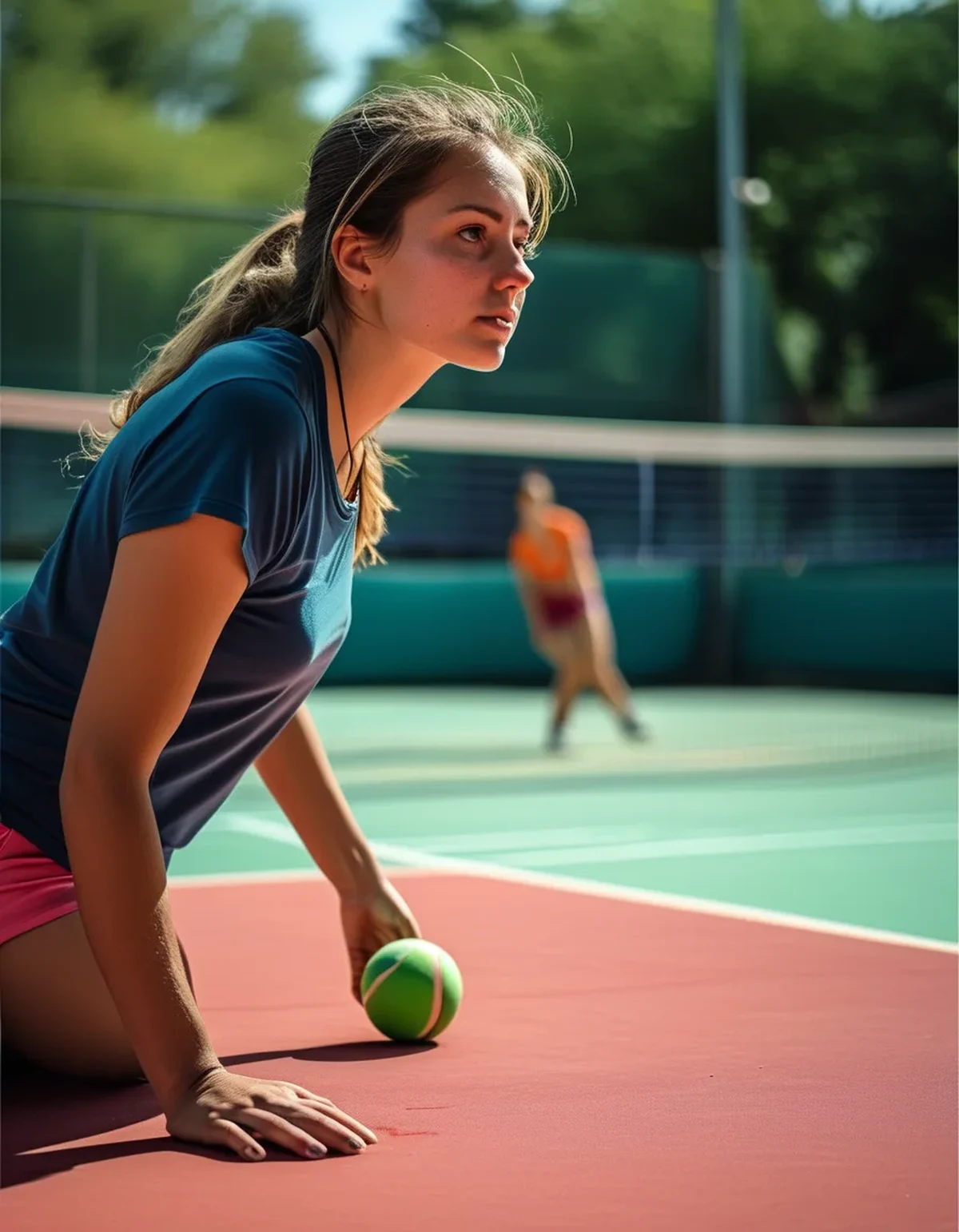
Seen here: UPF 50+ Pleated Running Skort with 26” Leggings & Pockets — shop similar styles on bubblelime.com
Keep Reading
This article is for general informational and styling purposes only. Fit, sizing, and product availability may vary.